
Easy to Read: improving accessibility in cultural places and beyond
Principles of simplified language for cognitive accessibility in cultural places
by Rosanna Migliorato
The Easy to Read is a term that indicates clear and simplified language that can be used to help users with reading difficulties achieve a better understanding of the text.
When there is an easy-to-read document, or Easy to Read, this symbol, recognized at the European level, is used (Fig. 1):

Fig. 1: symbol with the meaning "easy-to-read document".
In cultural places, the text is a fundamental and central element (guides, captions, presentations): the Easy to Read can therefore be used to its fullest extent; this tool can then be used transversally, for example at school level (creating lessons), or at social level (for example when it is necessary to create 'good practices' that are easy to understand).
The Easy to Read originally arose to help people with intellectual disabilities to understand information more easily, but it can also be used to make this information simpler to understand for many other audiences: users with limitations in reading ability due to pathologies, neurological or psychiatric conditions and disorders, and some forms of autism. Some social and cultural factors can also cause reading difficulties, as happens with children, the elderly, foreigners, people with a low level of schooling, or with limited language skills. Not to mention that an easy and well-written text can also be suitable for those with more advanced skills because they will be able to read it effortlessly.
The main assumption for the dissemination of this tool is that it should be a right for any audience to receive clear and easy-to-understand information to learn new things, develop their potential, have access to all possible information, use spaces to expand their knowledge, make decisions, and make choices.
The 'translation' into Easy to Read takes place through Guidelines that help write in an easy-to-read language, which include short sentences, the use of common words, and a text structure that facilitates reading.
On the ANFASS website (National Association of Families and People with Intellectual Disabilities and Neurodevelopmental Disorders), it is possible to find the Guidelines presented in detail and various easy-to-read documents as examples.
As an example aimed at providing a general overview of the subject, we can extract some indications from the Guidelines. For example:
Creating a simplified vocabulary means:
- Using simple, usual, and non-abstract words;
- Avoiding metaphors, adverbs, irony, and set phrases;
- Using the same word to indicate the same meaning;
- Avoiding the use of acronyms and abbreviations;
- Using Glossaries to explain complex and irreplaceable terms;
- Using specific instructions for writing numbers, dates, and order.
Using simplified punctuation implies:
- Adopting inclusive and concrete language;
- Using precise instructions when there are lists to maintain attention.
Using easily understandable sentences means:
- Sentences no longer than one line and with complete meaning;
- Simple verbs and avoidance of passive forms;
- Repetition of the subject for each action performed;
- Applying positive sentences.
Organizing a simplified text means:
- Presenting all the necessary information;
- Creating a text that is not too long;
- Organizing information in chronological order;
- Making thematic groupings.
Presenting a document in Easy to Read means:
- Always starting a new chapter on a new page;
- Using specific instructions for line spacing and font;
- Clearly indicating the beginning and end of the text;
- Using simple and clearly visible fonts.
Using appropriate images for a simplified text means:
- Using concrete and clearly visible illustrations;
- Creating uniformity in presentation and choice.
As already indicated, the Easy to Read 'simplified' language is promoted at the European level. In its structuring and use, it directly involves people with intellectual disabilities in the 'translation'. The involvement is fundamental not only from a practical point of view but also symbolically.
The process of simplifying the text from an original content not in Easy to Read, called validation, involves the action of two actors: the coordinator who presents the 'simplified' text and the validators (with intellectual disabilities and preferably in small groups).
The former must present the document through effective communication means asking for opinions on every simplified aspect (images, vocabulary, presentation), moderating the validation conversation that will result; the latter must read, compare with each other what is unclear, and validate the most effective simplified form.
It is also possible to write a text directly in Easy to Read. In this case, it is essential to know the audience to whom it is addressed and adopt a style suitable for them (for example, avoid childish language if the audience is adult). You must assume that the audience does not know the topic, so the objective is to be clear and exhaustive.
From the above, it is easy to understand how involving the actual users of the simplification in the first process and the detailed analysis of the audience in the second case are necessary to have a valid tool but above all, symbolically, place not only the needs but also the potential of the involved audience at the center. In some cases, the validation process may also take the form of a working activity.
Two examples (Fig. 2, Fig. 3) of possible museum captions 'simplified' in Easy to Read language, following the previously presented Guidelines, are available here.
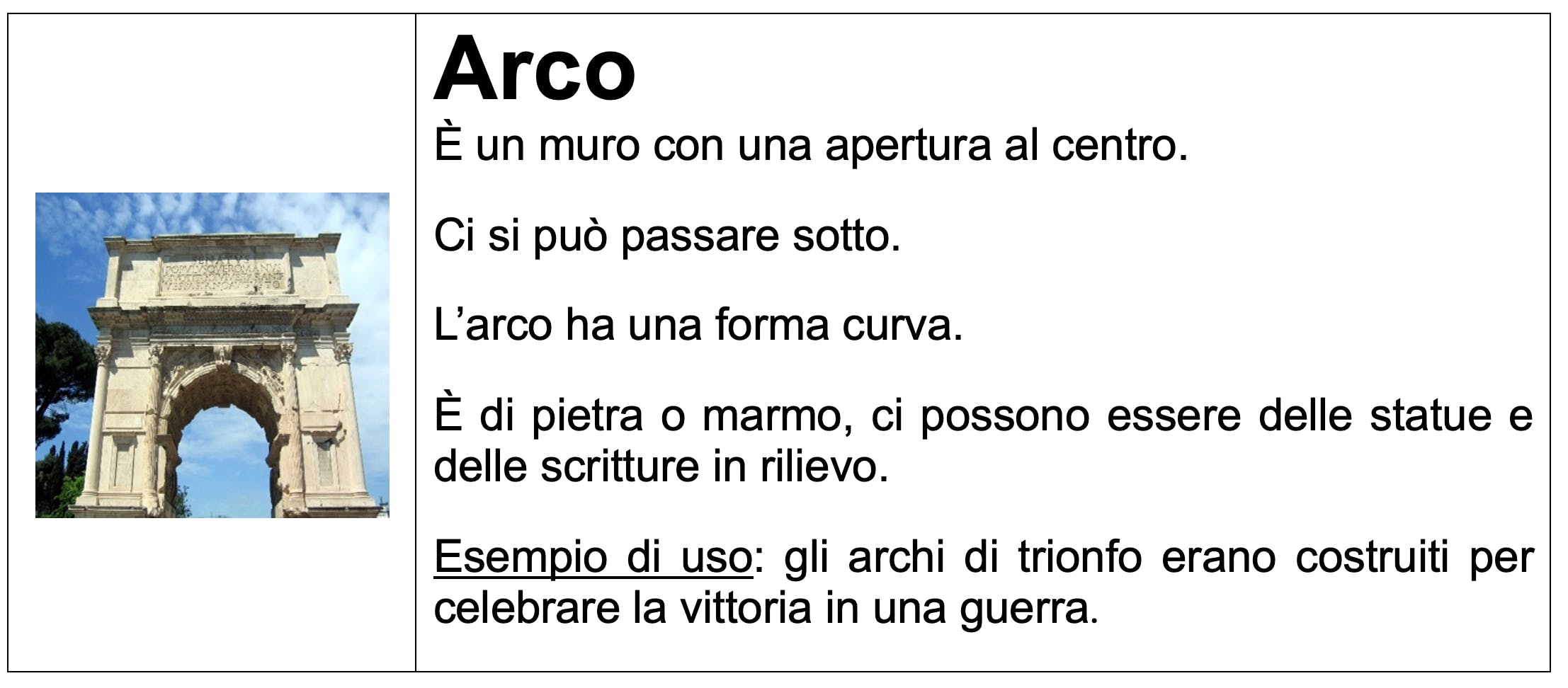
Fig. 2: example of Easy to Read text for 'Arch'.
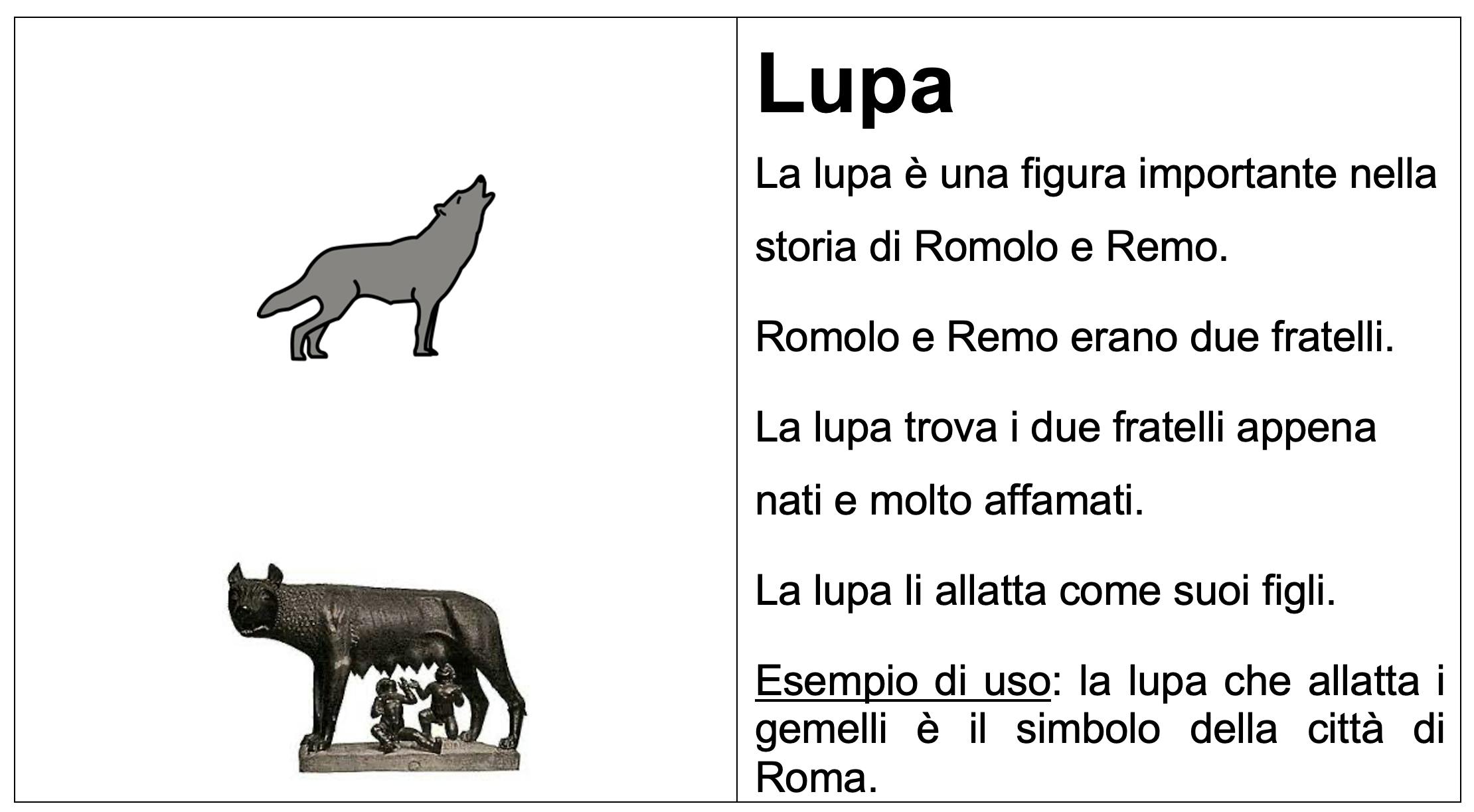
Fig. 3: example of Easy to Read text for 'She-wolf'.
In the field of cultural places, the use of Easy to Read language can also be effective in simplifying possible guides that describe and present spaces and their use, that give specific instructions on how to reach places such as bathrooms, storage rooms and resting points, that explain how to ask for help if necessary, that explain in detail what can be found in the various galleries or floors of the cultural place.
The tool is definitely very versatile and adaptable to every need and place. The important thing is to never lose sight of the characteristics of the audience for whom it is intended in order to best demonstrate its effectiveness.
To learn more
Crepaldi Davide, Neuropsychology of reading. An introduction for those who study, teach or are just curious, Carocci 2020.
Piemontese Maria Emanuela, Understanding and being understood. Theories and techniques of controlled writing, Tecnodid 1996.
Inclusion Europe, in collaboration with ANFFAS Onlus, Information for all. European guidelines to make information easy to read and understand for everyone, Inclusion Europe 2013.