museums
Towards accessible cultural institutions
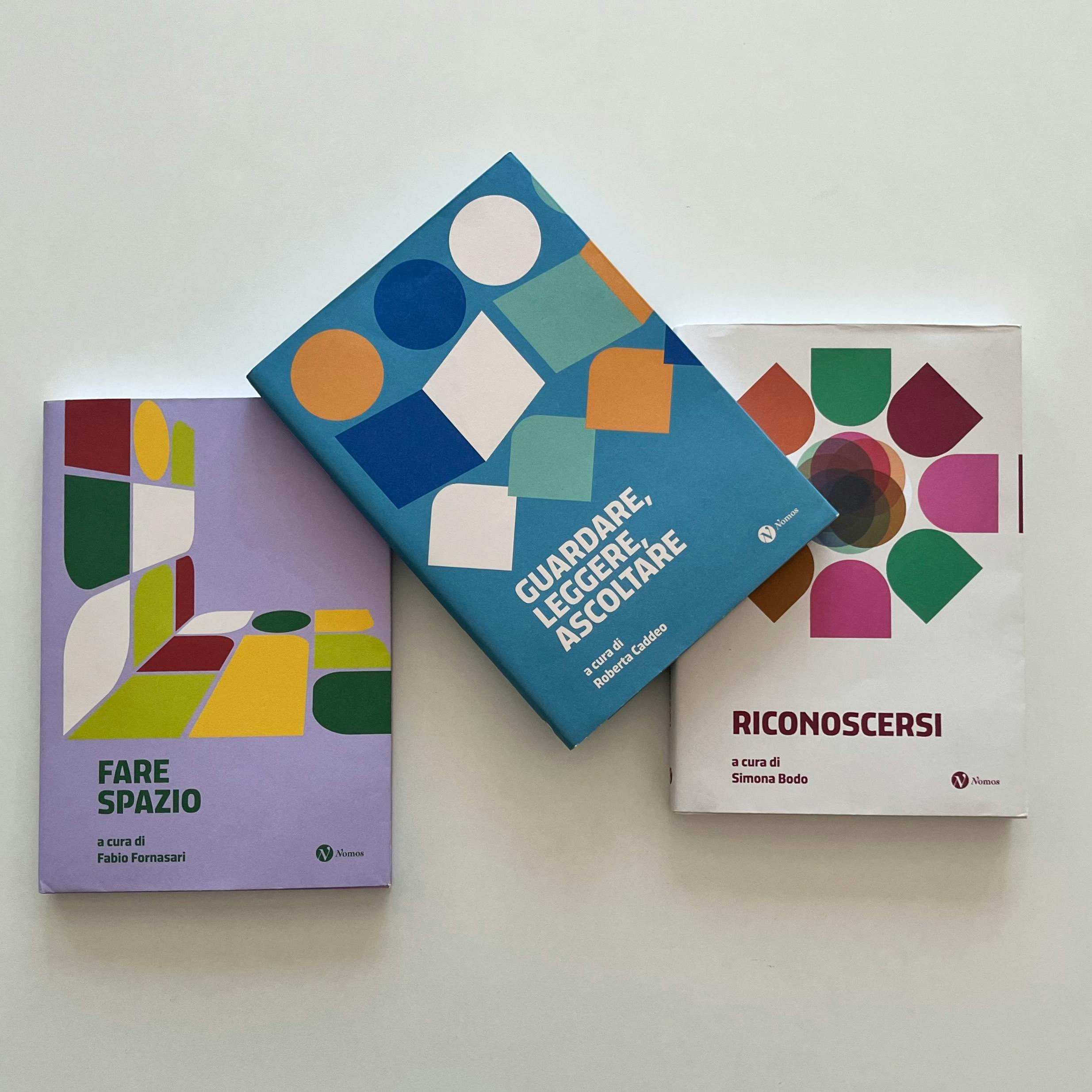
A collection of three volumes is available in bookstores published as part of the Personeper program. Accessibility in cultural places. An editorial proposal, curated by Anna Chiara Cimoli and Domenico Sergi, which contributes to the public debate on cultural accessibility addressing museums, archives, and libraries as spaces of rights, participation, and social development.
Through foreign contributions translated into Italian for the first time, original contributions specially commissioned, and an array of illustrations, the publications each tackle a macro-issue — space, language, representation — from a perspective transversal to the different cultural places.
Mediate, tell, communicate
Tellingcultural heritage today means making content, languages, and experiences accessible to increasingly diverse audiences. Mediare, raccontare, comunicare (Mediating, Narrating, Communicating) is the online course, available at fad.fondazionescuolapatrimonio.it, for professionals working in curating, education, mediation, and communication of cultural heritage and collections
Breaking down relational barriers in access to cultural places
The article addresses the theme of accessibility to cultural places as a fundamental right of people with disabilities, also enshrined by the UN Convention on the Rights of Persons with Disabilities. It highlights the shift from a person-centered view to an environmental perspective, in line with the ICF 2001, which assigns a decisive role to the context. Alongside architectural and sensory barriers, the text explores relational barriers, often invisible but strongly impactful. Problematic attitudes of cultural operators, such as pity, infantilization, and paternalism, are analyzed, emphasizing the need to overcome them. Finally, training on communication and relational skills is proposed as a key lever to build truly inclusive and participatory contexts.
Accessibility to cultural heritage and visual impairment
The article analyzes cultural accessibility for people with visual disabilities, highlighting how an inclusive approach requires attention to all aspects of the experience, from reception to the tactile and visual perception of the works. The importance of tools such as tactile paths, maps and models, relief reproductions, braille captions, and QR codes with audio descriptions is emphasized, along with clear and detailed indications on language and orientation. The design must consider different visual conditions and individual needs, offering reasonable accommodations and personalized support. Essential is the direct involvement of people with disabilities in the design and evaluation of the paths. The goal is to ensure a meaningful, enriching, and accessible cultural experience for all visitors.
Accessibility as a paradigm: the V&A East Storehouse
The V&A East Storehouse in London inaugurates a new museology, transforming the storage into a radically accessible public space without predetermined routes. Through sensory tools, sign language videos, and the removal of physical barriers, the institution makes over 500,000 objects from the collection accessible. The experience transcends the traditional 'do not touch' prohibition, promoting personal exploration and direct viewing of the restoration work. The project redefines the museum as an open network of meanings, turning the 'behind the scenes' into an opportunity for active participation.
Accessibility, or putting people at the center
The article interprets accessibility as a systemic approach that crosses all museum functions, transforming it into a social infrastructure oriented towards well-being, participation, and recognition. Through the case of the Uffizi Galleries, it is shown how cultural mediation and inclusive design can redefine the relationship with diverse audiences. The establishment of the Department of Cultural Mediation and Accessibility marks a shift towards practices based on direct experience, listening, and co-construction. The tools activated – from Activity Bags to digital narratives, from tactile paths to multisensory experiences – respond to different needs by enhancing a plurality of languages and perceptions. A model of the museum emerges as a relational space, where accessibility becomes a continuous and shared practice of cultural citizenship.
Thin places: the fairy tale as the golden key to accessibility
This article proposes the use of fairy tales as an interpretative and design tool for accessibility in museums and cultural venues. Through concrete experiences, it demonstrates how the fairy tale structure – comprised of thresholds, stages, and transformations – can guide inclusive and multisensory exhibition itineraries. Fairy tales thus become a tool capable of integrating different languages (visual, corporeal, and auditory), facilitating audience comprehension and emotional engagement. From this perspective, accessibility is not simply the removal of barriers, but a cultural and ethical practice that enhances a plurality of perceptions and narratives. Finally, the symbolic and political dimension of fairy tales opens up alternative visions of society, promoting justice, reciprocity, and social transformation.