Museum accessibility: a duty, not an option
Experiences in Sicily between community, multisensoriality, and participation
by Dario Scarpati
Let's start with a premise: accessibility is an ever-evolving term and what today falls within the parameters will not even be considered tomorrow. And this is a good thing, because it forces us to reflect, to experiment, to confront ourselves daily with best practices and the most correct requirements.
The term ‘accessibility’ does not refer to ‘categories’ of people: a museum is accessible (understandable, enjoyable, inviting) for everyone, or it is not. Simple! And that ‘everyone’ must also include those who do not enter museums: it is easy to make archaeological museums for archaeologists; it is more complex to build an exhibition that is able to dialogue (the verb is chosen carefully: dialogue, not monologues) with anyone who, for any reason, happens to pass by. There can be infinite unconventional reasons to enter a museum: book presentations, theatrical performances, workshops. We have learned that themed birthday parties for children can be organized, as the Mestni Muzej of Ljubljana does. And much more.
What is a museum? The definition approved by ICOM in 2022, although certainly presenting aspects of compromise, is (and must be) a beacon today:
«A museum is a not-for-profit, permanent institution in the service of society that researches, collects, conserves, interprets and exhibits tangible and intangible heritage. Open to the public, accessible and inclusive, museums foster diversity and sustainability. They operate and communicate ethically, professionally and with the participation of communities, offering varied experiences for education, enjoyment, reflection and knowledge sharing».
Every definition is the frame within which to move and any museum operator chooses the part that belongs most to them. Mine: «in the service of society» and «open to the public, accessible and inclusive, museums foster diversity and sustainability».
With some examples, which are not best practice, but life moments tending to everyday reality in the museums where I worked and work, I will try to explain.
To build a museum «in the service of society» you have to be immersed in the life of the community you want to represent, and this is not easy. Distrust towards the ‘museum’ institution exists and we must not pretend not to see it: you have to work with the citizenry through the shared construction of narratives.
A useful tool is the community map, that is a description (graphic, photographic, narrative), not only historical-naturalistic-geographical of the place, but that develops a story of the microcosms that belong to the people; a personal and collective narrative, which projects us into the living fabric of the community. We have done several experiences of this type in the province of Palermo: in Piana degli Albanesi and in Gangi; with the project Madonie Cultura Accessibile, in eleven municipalities of the area.
Projects like this implement connections that already exist in reality, as well as museum networks (ours, MUSEA Madonie e Himera, connects twenty-one municipalities) or eco-museums (the Madonie Ecomuseum has been recognized since 2014).
This also allows us to define common guidelines in building exhibitions, thus giving ‘accessible’ rules and advice also for those who are less equipped (Fig. 1). There are national and regional regulations [1] for evaluating the quality of museums that are extraordinarily important; but having a small handbook for municipal museums, with few but clear concepts and more direct references, is also useful.
Municipal museums are very often built in ‘historic’ buildings and this creates difficulties in removing physical barriers. But, at the same time, it opens up unexpected potentials: a place of detention, for example, that becomes a place of culture, allows for reversing civic roles, building hope and enhancing potential. Yet difficulties exist!
The founding law of PEBA (Plan for the elimination of Architectural Barriers) is quite old [2]. But only with the PNRR has there been an increase in drafting these plans, because it was required as a prerequisite for access to funds. In these forty years (yes, forty!) sensitivity has grown and understanding PEBA now is much more extensive than it was in the legislator's intentions. The Ministry now called the Ministry of Culture has published guidelines and directives [3] that help us draft plans that holistically address the public (I know it would be more correct to speak of ‘publics’ in the plural, but I prefer to consider those entering the museum simply as people, avoiding ‘targeting’ them; I don’t know if it’s right, but it’s my way of relating).
An exhibition must be approached in many different ways and the advantage of building a multisensory museum is that it allows us to have more communication channels. The inclusion of tactile tables within museum sections (not relegating them to the margins) allows everyone to have a physical and emotional experience. Perhaps it is easier with anthropological objects (trying to limit visitor risk); it would seem more complex for art and archaeological museums. For the former, I invite you to visit the Museo Tattile Omero of Ancona, where reproductions (material and formal) travel together with (many) artworks specially made to be touched.
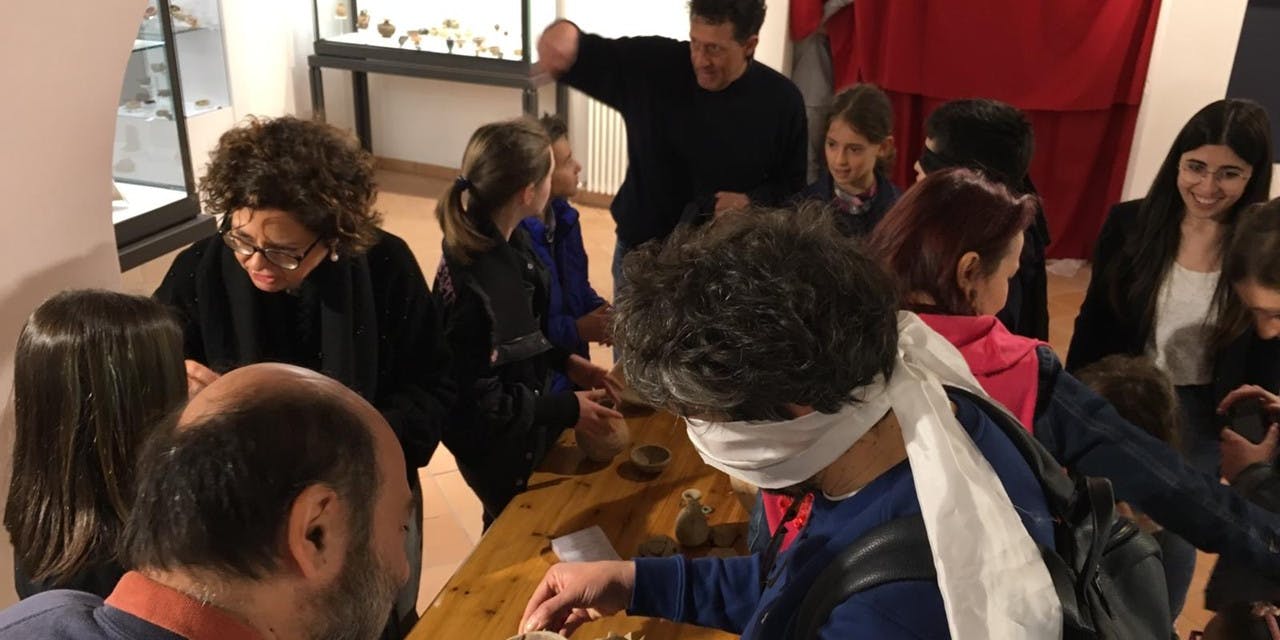
At the Civic Museum of Petralia Soprana, with the Soprintendenza per i Beni Culturali e Ambientali of Palermo, we set up a tactile table with archaeological finds, allowing all visitors to physically approach an object two thousand years old. It is not only useful for the blind, but for anyone who wants to experience an unusual emotion. The fragments exhibited this way allow us to tell stories: a brick with a dog’s imprint makes us think how happy the worker was; a lead seam for a jar brings us back to The Jar by Pirandello (we are still in Sicily).
To learn how to propose a tactile experience we tried many attempts. Two moments stand out that are worth briefly telling.
During the 2019 International Museum Day, at the Civic Museum of Gangi we proposed a tactile table with archaeological objects guided by very young students from local schools (Fig. 2) which allowed us to turn positions upside down: the teacher, blindfolded, was able to touch an object with the explanation of the pupil. Ultimately, a double role exchange. For those working in the archaeological section of the museum it was important to understand methods and approach, then study the correct way to reproduce it.
In the same museum, the UICI (Unione Italiana dei Ciechi e degli Ipovedenti) Section of Caltanissetta taught us how to read and interpret archaeological objects through hands. At the end of an experience with a local Association (Dimensione Uomo OdV), that works with people with cognitive-relational disabilities, the need arose to tell what was being done. Two narrative channels were proposed: an Easy to read guide, to facilitate the understanding of objects, and a reproduction with a model of the Monte Alburchia archaeological area (an important site in the Gangi area).
The model combined the experience of construction and the expressly stated desire by the participants to also give blind persons the beauty of the mountain. In this way the ‘who does what – for whom’ was important: moving from a phase of ‘care’ to one of ‘proposal’, a significant leap.
I previously mentioned the languages used for our narratives, which must be understandable and easy for everyone. Today we have many methods available: drafting guides in Easy to read [4], useful for those who have difficulty with language and words, AAC (Augmentative and Alternative Communication), or the more recent (for us) kamishibai (Fig. 3).
In composing an exhibition panel we set some rules for ourselves: we limit the number of words, about one hundred, to avoid the visitor feeling unable to reach the end; we use multilayer language: a first simple approach sentence (not trivial, these are very distinct things); the text must not be complex in its formulation; it must have references for a more advanced technical reading. We usually check the difficulty of words used, eliminating specialist terms to the maximum [5].
I previously mentioned how, thanks to building a museum, a place changes its nature and transforms it. The Civic Museum of Petralia Soprana is housed in a former prison: a place where you would never want to enter and where the concept of culture seems far away. I leave aside the architectural difficulties we had to face, to focus on the concept of inclusion.
In 2017 a fortunate collaboration between the Regione Sicilia and the juvenile prison of Palermo led to building part of the anthropological exhibition, mixing the experiences of technicians, educators and, above all, the young inmates. Unique and lively narratives were built, uniting the lives of people very far from each other (in theory). Playing on the analogies and differences in the cultivation of olives or vines between the two shores of the Mediterranean made the boy (who has behind him an endless story, despite being very young) and the agronomist who explained the units of measure filling a ‘tumulo’ (a container that measures dry goods) with wheat equally important.
Sharing means, for example, studying traditional land use practices to carry them into the future, perhaps preventing their depletion [6]; it means listening to proposals (not only needs) from the reference territory; it means having (and giving) an active role to a public institution. It means being at the heart of the community: is it easy? Definitely not. But it is necessary if we want to keep giving meaning to our work.
Questo contenuto è rilasciato secondo i termini e le condizioni della licenza Creative Commons c.d. “Free Culture” – CC BY-SA (https://creativecommons.org/licenses/by-sa/4.0/); detta licenza consente, citando la fonte, di utilizzare e condividere i contenuti con qualsiasi mezzo e formato, nonché di trasformarli, per qualsiasi fine anche commerciale, e con facoltà di sub licenziare in futuro i contenuti ad altro editore, purché con le condizioni e i termini della medesima licenza CC BY-SA.
Diversi termini di titolarità e licenza sono indicati esplicitamente.
[1] Dipartimento dei Beni culturali e dell'Identità siciliana, Decree of October 7, 2015: Istituzione del sistema di accreditamento e monitoraggio dei livelli di qualità e degli standard dei luoghi della cultura della Regione siciliana.
[2] Article 32 of Law no. 41/1986.
[3] Ministero per i beni e le attività culturali, Direzione generale Musei, Plan for the elimination of architectural barriers (PEBA): a strategic plan for accessibility in museums, monumental complexes, archaeological areas and parks, 2022 (http://musei.beniculturali.it/progetti/piano-strategico-per-leliminazione-delle-barriere-architettoniche).
[4] ANFFAS, Easy to read language, Guidelines (https://www.anffas.net/dld/files/Lineeguida.pdf).
[5] Usually, to verify the complexity of words, we use the De Mauro Italian Dictionary (https://dizionario.internazionale.it).
[6] J. Mª Martín Civantos, Working in Landscape Archaeology: Social and Territorial Significance of the Agricultural Revolution in al-Andalus, «Early Medieval Europe», 19 (4), 2011, pp. 1-26.
To learn more
Let me tell you about the Petralia Soprana Museum: "Take a tour, Beauty." Barrier-Free Museum, Regione Sicilia. Assessorato dei Beni culturali e dell'Identità siciliana: Dipartimento del Beni culturali e dell'Identità siciliana, Palermo 2017.
G. Cetorelli, M.R. Guido, edited by, Cultural heritage for all. Usability, recognizability, accessibility, Enhancement Notebooks, NS 4, Ministry of Cultural Heritage and Activities Directorate General of Museums, Rome 2018.
F. Acanfora, In other words. Minimal dictionary of diversity, Effequ, Florence 2021.
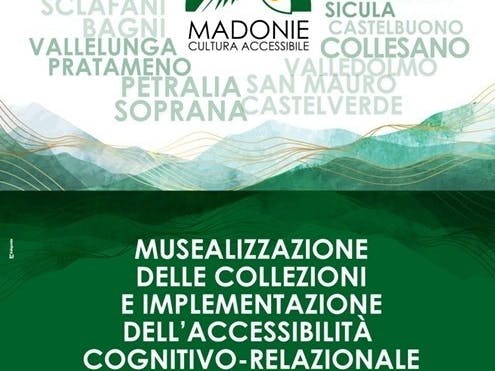
Fig. 1: Poster of one of the initiatives promoted by the "Madonie Cultura Accessibile" project.
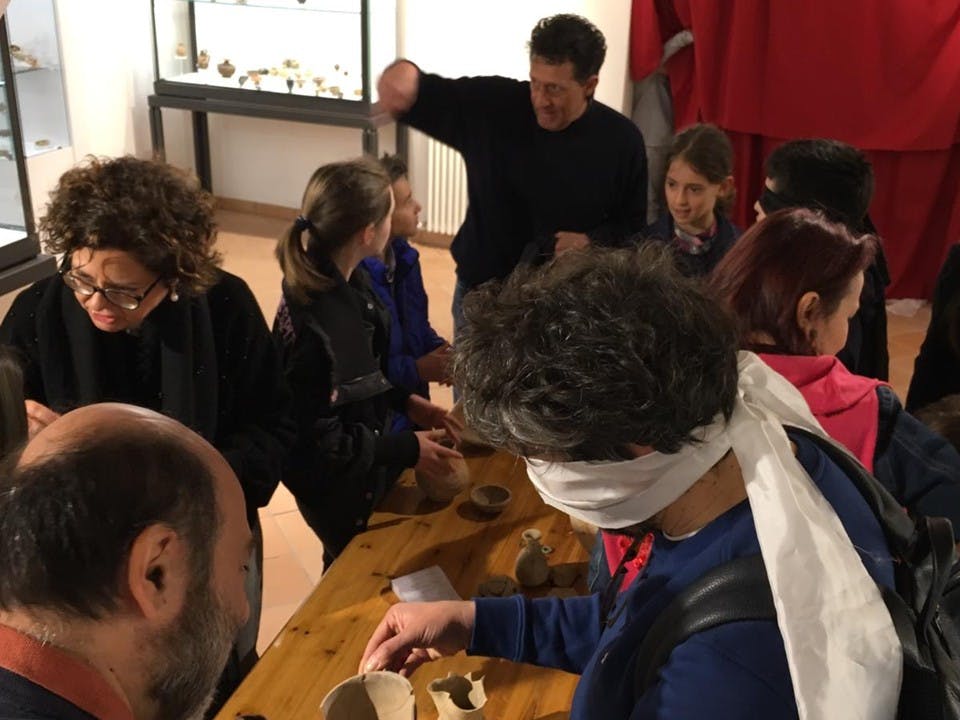
Fig. 2: Tactile table with archaeological objects.
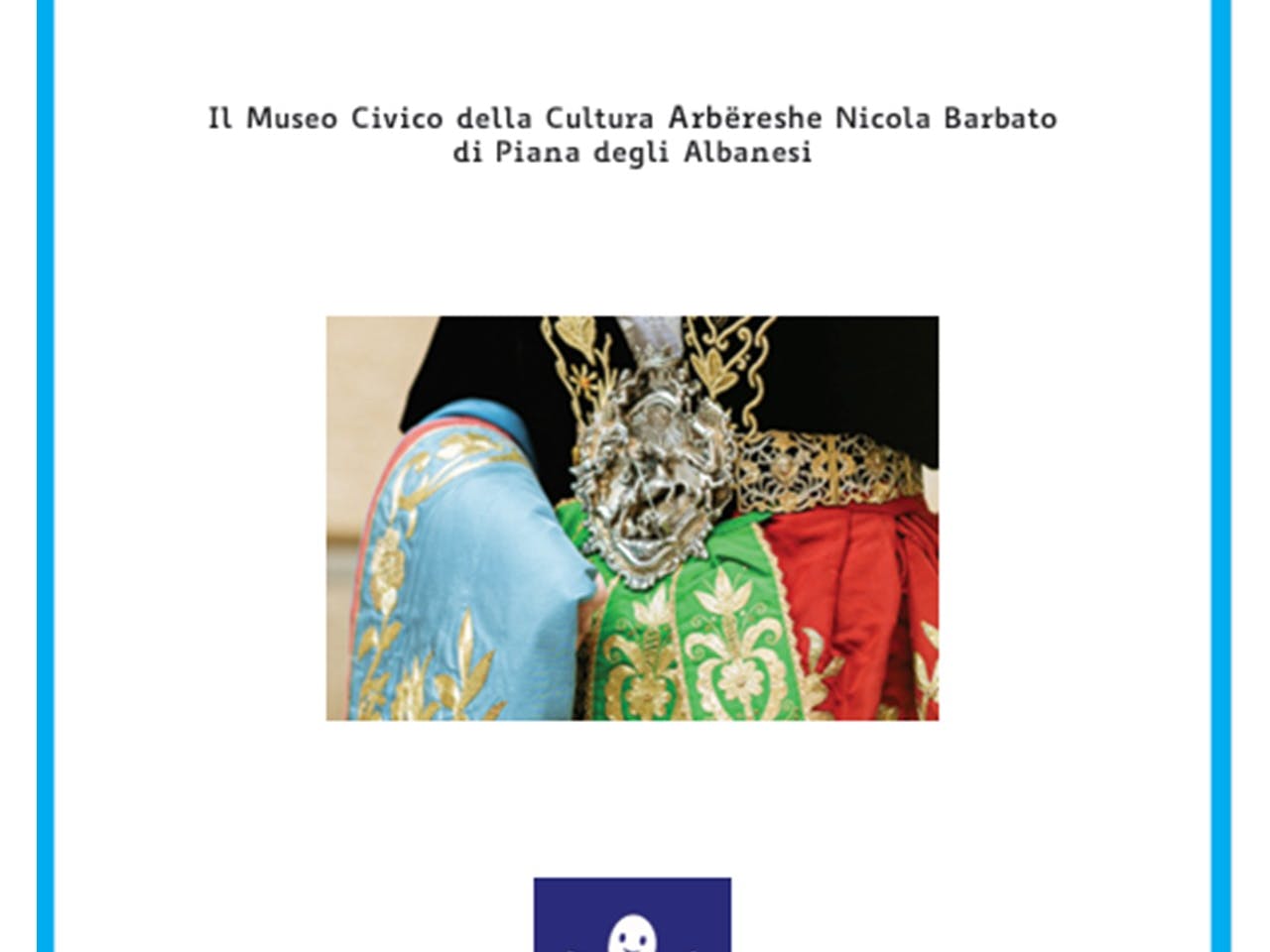
Fig. 3: Front page of the Easy to read guide of the Museo civico di Piana degli Albanesi