
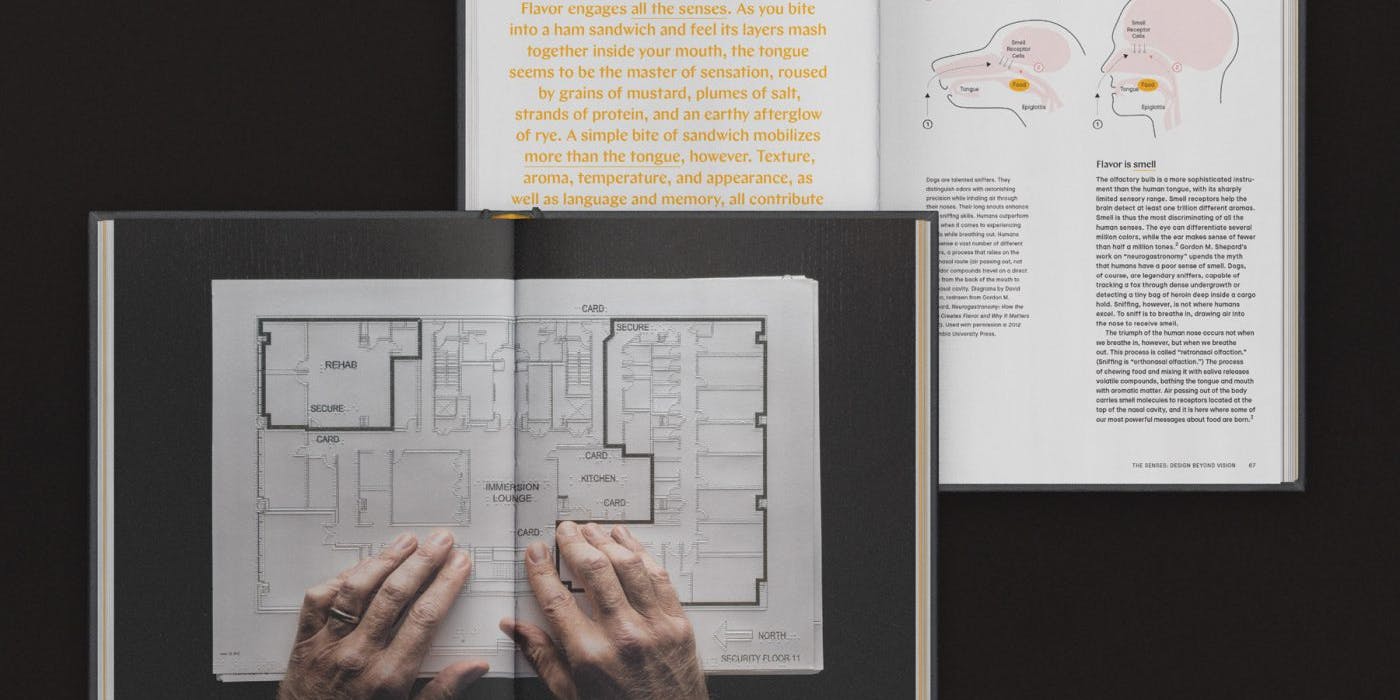
Describe to include
Alt-text, artificial intelligence, and access to digital cultural heritage
Right to information and multimodal communicative act
The difficulty of accessing content on printed paper is encapsulated in the English expression print disabled, coined by George Kerscher in 1989 to indicate
a person who is unable to effectively read printed texts due to a visual, physical, perceptual, developmental, cognitive, or learning disability (author’s translation; DAISY Consortium, Print Disabled).
Kerscher himself will extend this reasoning to on-screen reading and thus to the use of digital content.
Sight, therefore, is not the privileged access channel for everyone when it comes to enjoying informative content, textual or otherwise; the communicative act can occur and be received through different sensory modes and channels.
Article 21 of the United Nations Convention on the Rights of Persons with Disabilities (UNCRPD 2006) [1] is based on this principle. The Article recognizes the right of persons with disabilities to freedom of expression and opinion and the right to access information on an equal basis with others, through any form of communication of their choice and what is meant by «communication» is clarified by Article 2 of the same Convention:
By «communication» is meant languages, the display of text, Braille, tactile communication, large print, accessible multimedia content, as well as modes, means, and formats of written, audio, plain language, human-read, and augmentative and alternative communication, including accessible information and communication technologies (author’s emphasis; UNCRPD 2006, Art. 2).
The perceptibility of informative content is the starting point of the Web Content Accessibility Guidelines (WCAG), developed by the World Wide Web Consortium (W3C). The first of the four principles on which they rely establishes that digital content must first of all be perceivable:
information and user interface components must be presented to users in ways they can perceive (WCAG 2.2, Principle 1).
A principle that has acquired legal value with Directive (EU) 2019/882, known as the European Accessibility Act (EAA), aimed at harmonizing accessibility requirements for products and services in the internal market of the European Union [2]. In Italy, this principle was already pioneerly intercepted by Law January 9, 2004, No. 4 – Provisions to promote and simplify user access, particularly for persons with disabilities, to computer tools, known as the “Stanca Law,” which establishes accessibility obligations for public administrations.
Faro Convention and digitization of cultural heritage: genuine inclusion?
Digital technology offers the possibility to access information through different sensory channels thus facilitating the right to communication mentioned above, but this possibility is not automatic. For it to be realized, digital content itself must be designed taking accessibility into account, ensuring interoperability with assistive [3] (and adaptive) technologies, including screen readers, braille displays, magnification software, and text-to-speech.
In the MAB field (Museums, Archives, Libraries), the digitization of collections and archives promises to democratize access to cultural heritage, also allowing sector professionals and beyond to consult otherwise inaccessible materials and data, encouraging research and the exchange of knowledge, practices, and skills among institutions.
In recent years, also following the COVID-19 pandemic, large funds have been allocated in Italy and Europe to heritage digitization projects, expanding policies already underway. In Italy, the National Plan for Digitization of Cultural Heritage (PND) 2022-2026 of the Central Institute for the Digitization of Cultural Heritage responds exactly to this need: it promotes the construction of a digital ecosystem capable of offering new opportunities to the entire cultural ecosystem. The first goal of the Plan is precisely to expand forms of access to digital heritage to improve cultural inclusion.
These initiatives are part of the Council of Europe Framework Convention on the Value of Cultural Heritage for Society (STCE no. 199), known as the “Faro Convention” (2005) and ratified by Italy with Law October 1, 2020, No. 133. The Convention recognizes everyone’s right to cultural heritage as part of the right to freely participate in cultural life, enshrined in the Universal Declaration of Human Rights (1948, Art. 27) and guaranteed by the International Covenant on Economic, Social and Cultural Rights (1966, Art. 15) (Crobe and Schilleci 2024).
Visual cultural heritage and accessibility
However, despite regulatory efforts, economic investments, and ethical premises, accessibility to cultural heritage remains an open goal. Accessing cultural heritage means, to a large extent, accessing its visual heritage: photographs, reproductions of works, maps, digitized manuscripts.
Often, digital collections and archives still do not allow blind or visually impaired people to enjoy them – we are talking about about 30 million people in Europe according to European Blind Union (EBU) statistics – because the images they contain are not associated with alternative descriptions (alt-text).
Alt-text and digital cultural heritage
But what exactly is an alternative description? Alt-text is a short text that conveys the meaning of an image taking into account the context in which it is inserted.
The need is for images that serve an informative function, different from so-called decorative images, which do not require it [4]: in an online catalog sheet, for example, the ornamental divider separating the “Description” section from the “Bibliography” section does not require alt-text, while the reproduction of the work does. Similarly, alt-text is required for functional images – icons and buttons – for which the textual alternative must describe the action, not the appearance: the magnifying glass icon of a high-resolution viewer should be described as “Zoom in,” not as “Magnifying glass” [5].
Moreover, two other types deserve special attention in the MAB field. Complex images, such as charts, archaeological plans, stratigraphies, comparative tables, cannot be resolved with a short text: they would require, besides alt-text, an extended alternative description that fully conveys the informative content [6]. Text images – frontispieces, epigraphs, historical posters – require the alternative to reproduce the same words present in the image [7].
The purpose of alt-text is thus to convey, through the textual medium, a message originally entrusted to the visual medium. People who cannot see an image, for example, can listen to the alt-text read aloud via text-to-speech, or perceive it tactilely through a braille display; people who cannot listen to an audio file can view and read the textual alternative.
The presence of alt-text also makes visual content indexable via SEO while its absence or the presence of incorrect alt-text can penalize the content itself; it makes them, at the same time, readable and thus citable by AI search engines, which use the alt attribute as a textual signal to interpret an image.
Yet, the absence of alt-text remains one of the most frequent barriers to accessing digital cultural heritage, as studies on the topic testify.
Digital collections and absence of alt-text: studies and examples
Cecilia, Moussouri and Fraser (Cecilia et al. 2023a) underline how the technology for implementing alt-text has existed for decades, without yet finding stable space in everyday museum and sector academic production practices. Recognizing the importance of a change in perspective, the authors document the choice of the journal Curator: The Museum Journal (Wiley) [8] to modify its editorial policy as an act of responsibility towards a change across the entire sector that goes beyond a culture of regulatory compliance. Moreover, to support authors in implementing alt-text, they published a dedicated paper (Cecilia et al. 2023b).
Mähr and Twente (2025) – whose project will be analyzed in the section: Two projects dedicated to alt-text and AI in the MAB field – document instead the lack of accessibility of images within digital collections. Their analysis focuses on a corpus of over 1,700 digital objects from the historic Stadt.Geschichte.Basel collection: none of them had ever received alt-text, demonstrating how this step is systematically treated as a secondary priority or ignored altogether.
The British Museum also openly acknowledges in its accessibility statement that alternative descriptions for objects in the online collection are not directly associated with images, and that some existing ones are so summary as to be uninformative [9].
Finally, Van Hyning and Chundury (2026), in research conducted at the Library of Congress, observe how many digitized collections lack alternative descriptions or transcriptions that allow independent access for blind or visually impaired users. The added value of this study is its approach: it does not merely document a gap but, through participatory design sessions with people with visual disabilities aims to answer the following research questions:
- What information do blind or visually impaired people want to obtain about visual cultural heritage, and how much description is useful?
- Which sources do they want to draw on to get these descriptions? How do blind and sighted participants evaluate the relative merits of four different sources – descriptions generated by general AI tools, human transcriptions obtained via crowdsourcing, existing curatorial metadata, and web research, including image search, conducted to obtain additional context?
- What new ways of interacting with visual cultural heritage would they like libraries to offer?
- What are their priorities and contexts in which they use visual cultural heritage?
The very title of the contribution (Metadata is wonderful, but there’s a coldness to it) summarizes the outcome: curatorial metadata is valuable but alone does not convey the experience of an image. Participants ask for descriptions that go beyond catalog data, including vivid visual details, human presence, and context. Hence the authors’ proposal: layered descriptive strategies, capable of combining factual accuracy and interpretative richness. AI, as we will see, can help in this process provided it remains under strict human supervision.
But what does it really mean to use and implement alt-text? To understand how those who do not directly access the informative content of an image can benefit, it is necessary to take a step back and observe what happens “behind the scenes” of a web page: more specifically, what happens when navigating with assistive technology encountering an image.
Behind the scenes of digital content: alt-text, HTML coding, and assistive technologies
In very simplified terms, we can say that every perceivable digital content by an end user results from languages that encode information making it interpretable by the software and hardware components of a computer or smartphone as well as by assistive technology. In the web context, the HTML is the markup language that structures and describes content, defining the semantic function of each element on a page. It is within this coding that alt-text is technically implemented.
Assistive technologies, in fact, are not able to ‘see,’ and thus convey, the visual content of an image. For this reason, it is necessary that each image be associated with the HTML attribute alt: assistive technology can then read the inserted textual value and transform it into vocal, tactile (braille), or magnifiable text output, according to each user’s needs.
In the absence of alt-text, when assistive technology encounters the <img> tag it signals the presence of the image, but its informative content cannot be conveyed. This creates an informational discontinuity compared to the page text, even more marked if there is a caption that remains without its visual referent for those who cannot see the image.
For those unfamiliar with HTML, the following example concretely shows where and how the alternative description is inserted within a web page code:

Fig. 1: lines of HTML code containing the alternative description of the image.
Figure 2 shows the visual result of the HTML code lines on the webpage, where each letter in the illustration corresponds to a code element:
- a – figure: grouping in a single block of image and caption.
- b – img:
- b1 – src: the attribute specifying the path or URL of the image file to load.
- b2 – alt: the attribute allowing the specification of the textual alternative. It appears on screen, thus accessible to anyone, only if the browser fails to load the image; it is always read by assistive technologies. In the illustration the text is shown as an overlay for exemplification purposes.
- c – figcaption, that is the caption, visible to all.
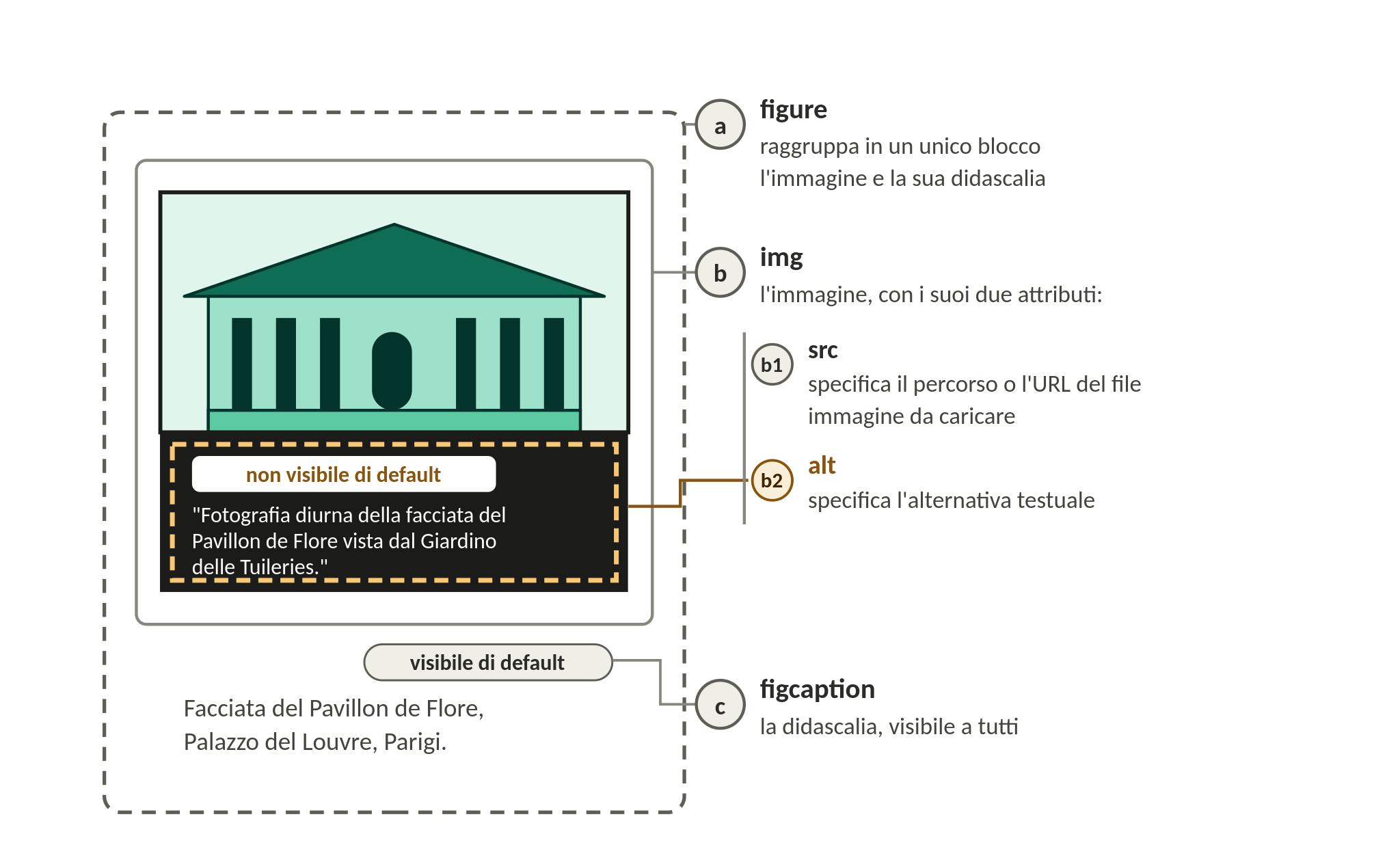
Fig. 2: from HTML code to the web page (illustration produced with Claude Opus 5 (Anthropic) based on the author's specifications and revision, August 2026).
Alt-text and generative artificial intelligence, a possible duo?
Creating alt-text is a traditionally onerous task: it requires accessibility skills and, at the same time, specific knowledge of the content to be described. In the museum field this means mastering the historical, iconographic, and curatorial dimension of the object.
An added scalability problem. Digital collections of thousands of items struggle to be made accessible because accessibility is not conceived as an integral part of digital resources creation, to be done in itinere, but is implemented afterward.
It is especially on this last obstacle that the hypothesis of using generative AI for the semi-automatic production of alt-text has been grafted. The development of multimodal models increasingly high-performing has opened the way to their use for this purpose. These are systems capable of receiving input texts and images and returning a textual output that describes, interprets, or answers questions about the visual content, combining linguistic and visual understanding in a single system.
Among the models usable for this purpose are, for example, OpenAI’s Chat-GPT, Google’s Gemini, Anthropic's Claude (proprietary models) or Mistral Large 3 by Mistral and Alibaba's Qwen3-VL (open-weight models), as well as dedicated applications like Be My AI by Be My Eyes.
The study of the potential of these models for alt-text creation is still ongoing across various fields: from studies on semi-automatic alt-text production for social media platforms (Low et al. 2019), to researches focused on STEM content for academia (Buzzi et al. 2024), to the editorial field (Morelli 2025; Risi 2025), up to cultural heritage (van Schalkwyk et al. 2025; Mähr and Twente 2025).
Each field presents its own peculiarities, reflected in the way AI can be employed. A common trait remains the need for a semi-automatic process, human supervision, and an interdisciplinary approach combining accessibility skills with strong domain knowledge.
Two projects dedicated to alt-text and AI in the MAB field
1. Seeing History Unseen: Evaluating Vision-Language Models for WCAG-Compliant Alt-Text in Digital Heritage Collections (Mähr and Twente 2025)
With the project Seeing History Unseen: Evaluating Vision-Language Models for WCAG-Compliant Alt-Text in Digital Heritage Collections (2025), Mähr and Twente explored the use of multimodal models for creating alt-text in historical digital collections. A central goal of the research is to evaluate if and how current AI models can serve as accessibility assistants in a digital workflow applied to history. The adopted approach is interdisciplinary and combines computational experimentation with qualitative analysis based on historiographic methods.
The research was applied to a heterogeneous dataset, built starting from data of Stadt.Geschichte.Basel, and includes different item types: historical photographs, maps, reproductions of artifacts. The multimodal models used cover both open-weight models: Meta’s Llama 4 Maverick and Alibaba’s Qwen3 VL 8B Instruct; and proprietary models: Google’s Gemini 2.5 Flash Lite and OpenAI’s GPT-4o mini.
The study does not conclude with the article published by the Association for Computers and the Humanities in the Anthology of Computers and the Humanities (vol. 3): data, methodology and replicable pipeline are freely accessible in the repository Seeing History Unseen: CHR 2025 Conference Materials.
In their qualitative analysis of the results Mähr and Twente report that:
- Multimodal models, although operationally usable, present an intrinsic epistemic fragility with the risk of perpetuating factual errors, stereotypes and historical biases.
For example:
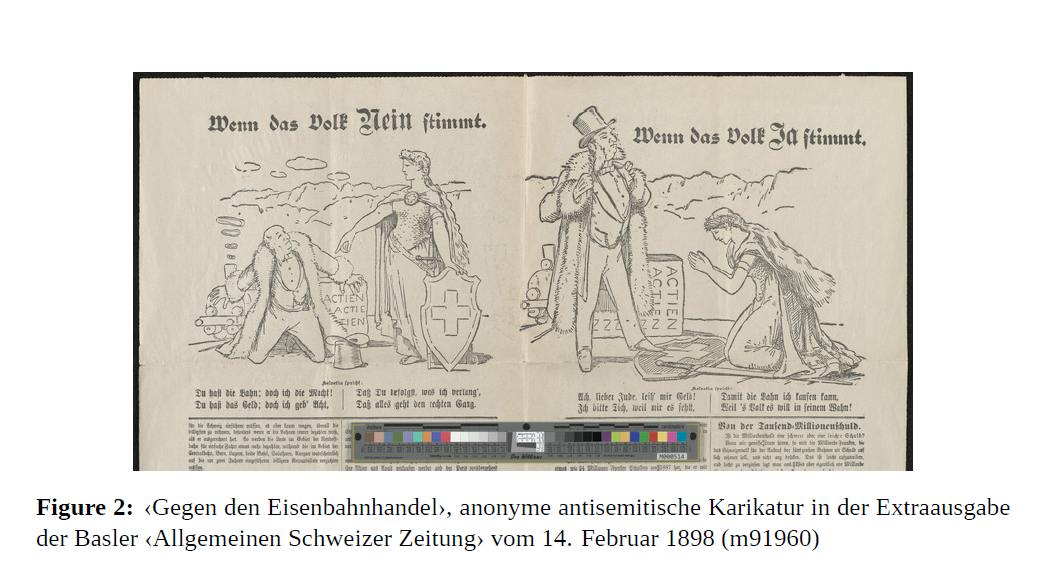
Fig. 3: one of the items used as an example by Mähr and Twente to outline the results of the qualitative analysis conducted (Mähr and Twente 2025, 1158).
§ Alt-text (produced by Meta Llama 4 Maverick):
Antisemitic cartoon on railway nationalization 1898. On the left: Helvetia in a defensive attitude forces a usurer to his knees. On the right: Helvetia kneeling asks money from a rich Jew. Contrasting portrayal of the referendum on railway nationalization. (author’s translation; Mähr and Twente 2025, 1158)
§ Problem encountered: as the authors point out, the text uncritically reproduces the term reichen Juden, ‘rich Jew,’ an antisemitic stereotype probably taken from the item metadata or distorted training data, not a neutral description of the visual content.
- Not all models are suitable for every image category. A model that works well on a photograph may fail on a diagram, and vice versa.
- Although multimodal models prove able to produce alternative descriptions in line with accessibility guidelines, these descriptions may be factually wrong, ethically questionable, or epistemically superficial, so qualitative analysis of outputs is necessary.
In short
This study confirms the conception of AI as an accessibility assistant rather than as an autonomous author. The VLM output should be considered a first draft to be reviewed by humans, not a final product (author’s translation and emphasis; Mähr and Twente 2025, 1159).
This, according to the authors, redefines the work of digital heritage professionals: no longer alt-text authors but critical curators of machine-generated drafts. A transition requiring new AI literacy skills, able to recognize subtle biases and factual inaccuracies even when generated text complies with accessibility guidelines (Mähr and Twente 2025).
2. AI-generated alt-text for digital collections (van Schalkwyk et al. 2025)
The project AI-generated alt-text for digital collections by van Schalkwyk et al. (2025) is part of a national program aiming to experiment with a new model of AI dissemination in the UK’s cultural and heritage sector (Pon et al. 2026). It was conducted from November 2024 to March 2025 and coordinated by the Natural History Museum of London (NHM), supported by the UK Department for Digital, Culture, Media and Sport (DCMS).
The purpose is expressly to develop a framework for creating alt-text combining AI tools and human review, with the goal of improving digital accessibility and cultural sensitivity, offering a replicable model for museums, libraries, archives, and galleries.
The dataset used consists of a selection of digitized items from National Museums Liverpool including paintings, sculptures, natural history specimens, and cultural artifacts, selected to ensure variety of types, textures, colors, and contexts. A specialized dataset, curated by domain experts, of 20 sensitive images depicting themes such as slavery, colonialism, sexuality, and violence was also built. This set allows testing the ability of multimodal models to generate descriptions that remain factual, respectful and contextualized, without sanitizing historical realities or using unnecessarily crude language. The tested models cover both open-source solutions: BLIP-2; and proprietary ones: Anthropic’s Claude and OpenAI’s GPT.
A key element of the project is prompt construction, refined through iterative tests and with input from museum curators:
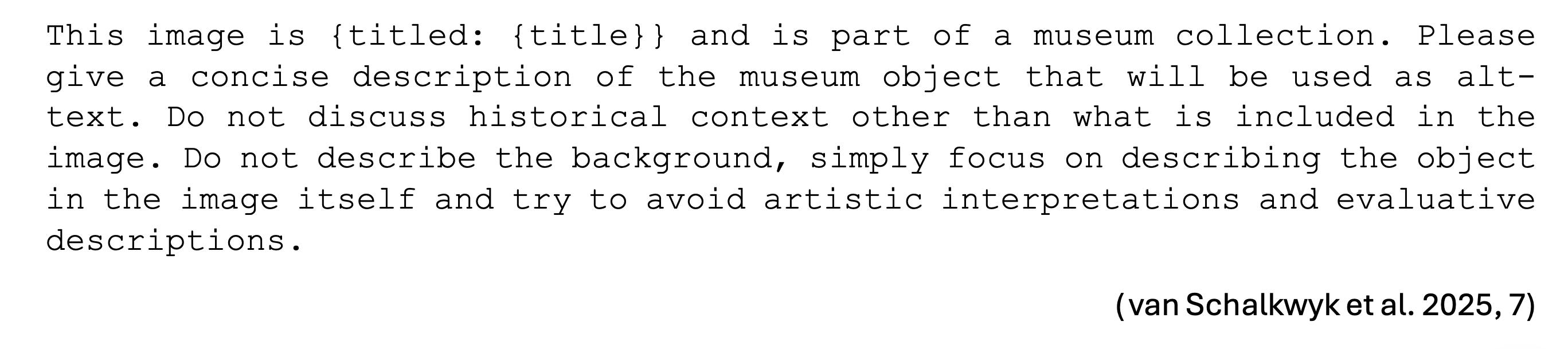
Fig. 4: proposed prompt to generate an alt-text for a museum artwork.
It is worth noting that this prompt, applied indiscriminately to the entire collection, showed obvious limits: for example, the instruction not to describe the background works for a museum-photographed sculpture, but not for a painting where the background is part of the work. Hence the development of differentiated prompts by object category, a sign of how instruction-building requires domain expertise.
The results, besides being evaluated by domain experts, were reviewed by people with visual disabilities. The user experience study was supported by the consultancy Accessible by Design through remote sessions, in which participants evaluated each alt-text both individually and comparatively, assigning a score from 1 to 5 and providing qualitative comments. Here are some key data summarized; full analysis is in the paper.
- In terms of form, participants expressed a clear preference for clear, concise descriptions constructed to place essential information first. Brevity is appreciated but not at the expense of context when relevant, especially for historical and artistic content; overly long descriptions are tiring, also because many screen readers do not allow easy rereading of alt-text.
- Regarding sensitive content, the position was unanimous: alt-text must factually describe the matter without softening. Omitting or softening, the participants argued, would amount to a form of erasure, preventing access to important aspects of historical knowledge.
- Regarding AI-generated alt-text, participants were largely positive about the potential of AI-generated alt-text, sometimes expressing surprise at the quality of the descriptions. However, the study identified margins for improvement in clarity, contextual richness, consistency of descriptions, and adaptability to different needs. Expectations also vary depending on prior visual experience: those who have lost sight or have residual vision place greater importance on color descriptions and contrasts. Several participants also hoped for a more interactive model, where users could request additional details beyond the initial description.
Conclusions
Digitizing cultural heritage does not automatically mean including everyone in access to it, especially when it comes to visual heritage. An image without alternative description remains inaccessible even when freely consultable online.
Generative AI today offers a possible scaling leverage, but the examined projects converge on one point: the multimodal model produces a draft, not a definitive text. Factual errors, stereotypes inherited from training data, and epistemic superficiality require domain expertise, cultural sensitivity, and direct involvement of persons with visual disabilities in building digital cultural heritage accessibility.
Using AI for alt-text creation implies a professional profile in transformation: sector professionals thus become critical curators who must combine domain knowledge with accessibility and AI literacy skills. Obviously, a prerequisite for real sector change is that accessibility enters the workflow from the design phase of digital resources. Accessibility cannot be delegated to an algorithm: it is built together.
[1] The United Nations Convention on the Rights of Persons with Disabilities (UNCRPD) entered into force for the European Union on January 22, 2011, after signing and ratification by all Member States, which thus committed to guarantee the rights of persons with disabilities. In Italy, ratification occurred with Law March 3, 2009, No. 18.
[2] In Italy, the Directive was transposed with Legislative Decree 82/2022 (Legislative Decree May 27, 2022, No. 82). Also in Italy, on accessibility of public administration websites and mobile applications, Directive (EU) 2016/2102 was already in force, transposed in Italy by Legislative Decree 106/2018 (Legislative Decree August 10, 2018, No. 106), updating Law January 9, 2004, No. 4 – Provisions to promote and simplify user access, particularly for persons with disabilities, to computer tools.
[3] For a detailed understanding of the notion of “assistive technology” and “assistive product” see the World Health Organization and United Nations Children’s Fund, Global Report on Assistive Technology. 1st ed. World Health Organization, 2022.
[4] For a detailed guide see W3C, Web Accessibility Initiative (WAI), «An Alt Decision Tree», https://www.w3.org/WAI/tutorials/images/decision-tree/.
[5] For a detailed guide on functional images see W3C, Web Accessibility Initiative (WAI), «Functional Images», https://www.w3.org/WAI/tutorials/images/functional/.
[6] For a detailed guide on complex images see W3C, Web Accessibility Initiative (WAI), «Complex Images»,https://www.w3.org/WAI/tutorials/images/complex/.
[7] For a detailed guide on text images see W3C, Web Accessibility Initiative (WAI), «Images of Text»,https://www.w3.org/WAI/tutorials/images/textual/.
[8] Journal dedicated to museology and museum studies presenting viewpoints of international experts and professionals at the forefront of museal innovation and development, https://onlinelibrary.wiley.com/journal/21516952.
[9] British Museum, Accessibility Statement: «Non-compliance with the accessibility regulations: […] Alternative text for images in object records in Collection online is in the description for the item and not attached to the image itself, which may cause confusion for screen reader users. Some descriptions are well-written, and others are overly basic (e.g., “coin”). This fails WCAG 2.1 success criterion 1.1.1: Non-text content», https://www.britishmuseum.org/accessibility-statement.
To learn more
Buzzi, Marina, Giulio Galesi, Barbara Leporini, and Annalisa Nicotera. «Is Generative AI Mature for Alternative Image Descriptions of STEM Content?»: Proceedings of the 20th International Conference on Web Information Systems and Technologies, 2024, 274-281. https://doi.org/10.5220/0012996800003825.
Cecilia, Rafie, Theano Moussouri, and John Fraser. «AltText: An Institutional Tool for Change». Curator: The Museum Journal 66, fasc. 2 (2023a): 225-231. https://doi.org/10.1111/cura.12551.
Cecilia, Rafie, Theano Moussouri, and John Fraser. «Accessible Digital Images: AltText Guidelines for Authors and Museum Professionals». Curator: The Museum Journal 66, fasc. 4 (2023b): 537-546. https://doi.org/10.1111/cura.12577.
Council of Europe Framework Convention on the Value of Cultural Heritage for Society (ETS no. 199), https://www.coe.int/it/web/conventions/full-list?module=treaty-detail&treatynum=199.
Crobe, S., and F. Schilleci. The Faro Convention as a Right to Cultural Heritage: communities of practice and care: perspectives for redesigning territories. IT, 2024. https://iris.unipa.it/handle/10447/641575.
DAISY Consortium. «Print Disabled». In Glossary. https://daisy.org/info-help/glossary/.
Low, Christina, Emma McCamey, Cole Gleason, Patrick Carrington, Jeffrey P. Bigham, and Amy Pavel. «Twitter A11y: A Browser Extension to Describe Images». Proceedings of the 21st International ACM SIGACCESS Conference on Computers and Accessibility, October 24, 2019, 551-553. https://doi.org/10.1145/3308561.3354629.
Mähr, Moritz, and Moritz Twente. «Seeing History Unseen: Evaluating Vision-Language Models for WCAG-Compliant Alt-Text in Digital Heritage Collections». In Anthology of Computers and the Humanities, edited by Taylor Arnold, Margherita Fantoli, and Ruben Ros. Association for Computers and the Humanities, 2025. https://doi.org/10.63744/njQVYcLndSPE.
Morelli, Caterina. «Enhancing Accessibility in Publishing: Leveraging GAI for Effective Alt-Text Solutions». In Technology for Inclusion and Participation for All: Recent Achievements and Future Directions, edited by Katerina Mavrou and Pedro Encarnação. Springer Nature Switzerland, 2025. https://doi.org/10.1007/978-3-032-01632-4_48.
Kleege, Georgina. «Blindness and Visual Culture: An Eyewitness Account». Journal of Visual Culture 4, fasc. 2 (2005): 179-190. https://doi.org/10.1177/1470412905054672.
Poon, Sanson T. S., Arianna Salili-James, Chris Addis, et al. «Scaling AI Across the UK Culture and Heritage Sector: The NHM-DCMS AI Pilot Programme». Biodiversity Information Science and Standards 10 (January 2026): e182096. https://doi.org/10.3897/biss.10.182096.
RISD Museum. «Alt Text and Accessibility | RISD Museum». May 31, 2022. https://risdmuseum.org/art-design/projects-publications/articles/alt-text-and-accessibility.
Risi, Milena. «Accessible Images: AI-Generated Alt Text in Educational Publishing: Key criteria for creating alt text to enhance accessibility in educational publishing». Logos 36, fasc. 1 (2025): 50-69. https://doi.org/10.1163/18784712-20240039.
van Schalkwyk, Hester, Chris Addis, Sanson Poon, Arianna Salili-James, et al. «DCMS x NHM AI Pilot Project – NML – AI-Assisted Alt-Text Creation for Heritage Collections». Natural History Museum, 2025. Zenodo. https://doi.org/10.5281/zenodo.16883819.
Van Hyning, Victoria, and Pramod Chundury. «“Metadata is wonderful, but there’s a coldness to it”: exploring the visual accessibility of cultural heritage through participatory design». Information Research an international electronic journal31, fasc. iConf (2026): 438-447. https://doi.org/10.47989/ir31iConf64240.